
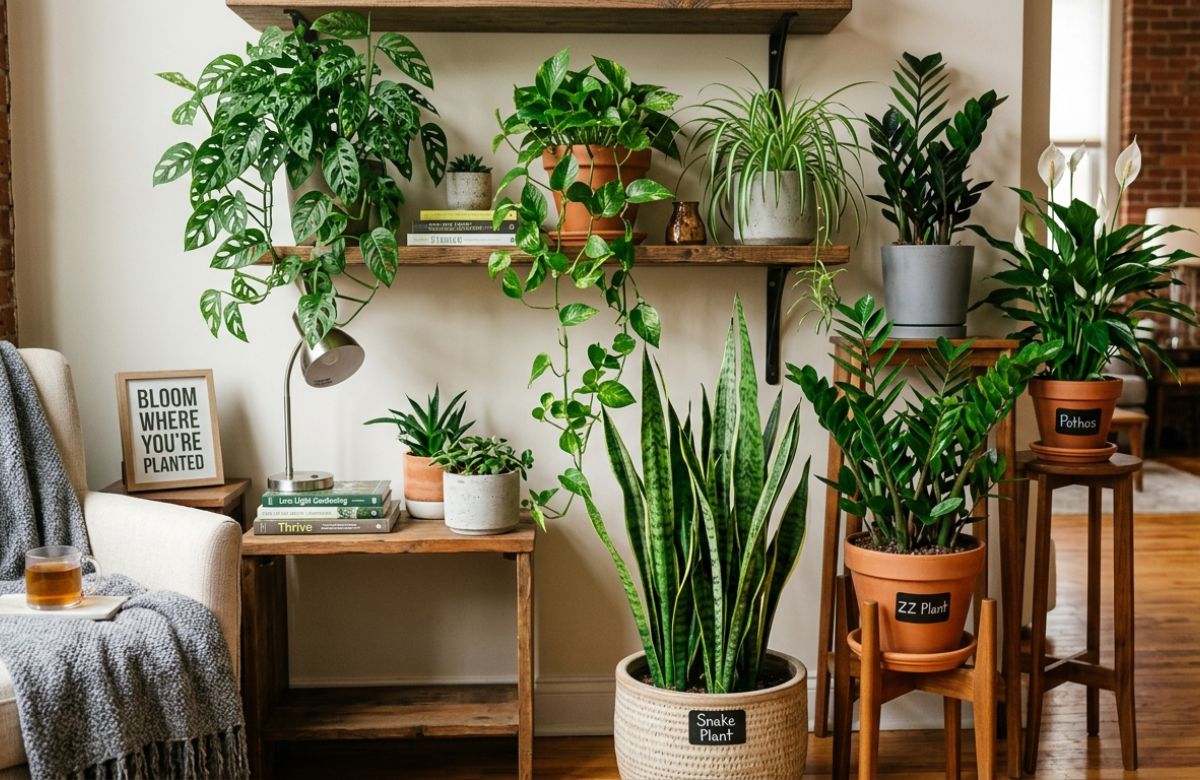
If you’ve ever looked around your apartment and wished it felt a little more alive, you’re not alone. Many apartment dwellers dream of filling their homes with beautiful greenery—only to realize that their windows barely let in any sunlight. Maybe your living room faces another building, or perhaps your favorite corner has no natural light at all.
I’ve been there myself. Years ago, I bought a beautiful flowering plant for a dim apartment hallway, convinced that watering it regularly would be enough. Within weeks, its leaves turned yellow, and eventually, it didn’t survive. That’s when I discovered there are actually indoor plants that survive without sunlight in apartments, and choosing the right ones makes all the difference.
The good news is that you don’t need a bright, sun-filled home to enjoy healthy indoor plants. Many species naturally grow beneath forest canopies, where direct sunlight is rare. With the right selection and basic care, you can create a relaxing indoor garden even in the darkest apartment.
What You Need to Know About Indoor Plants That Survive Without Sunlight in Apartments
One of the biggest misconceptions is that plants need direct sunlight all day. In reality, many popular houseplants evolved on forest floors where trees blocked most of the sun.
These plants typically thrive in:
- North-facing apartments
- Windowless offices
- Hallways
- Bedrooms
- Bathrooms
- Corners with indirect light
It’s important to understand one thing:
No plant can live forever in complete darkness.
Plants still require some light, whether that’s indirect daylight or occasional support from LED grow lights. Fortunately, many varieties tolerate very low light much better than flowering plants or succulents.
Some excellent low-light apartment plants include:
| Plant | Light Requirement | Watering | Difficulty |
| Snake Plant | Very Low | Every 2–4 weeks | Easy |
| ZZ Plant | Very Low | Every 3 weeks | Very Easy |
| Pothos | Low | Weekly | Easy |
| Peace Lily | Low | Weekly | Moderate |
| Chinese Evergreen | Low | Weekly | Easy |
| Cast Iron Plant | Very Low | Every 2 weeks | Very Easy |
| Heartleaf Philodendron | Low | Weekly | Easy |
| Parlor Palm | Low | Weekly | Moderate |
Common Mistakes People Make
Even low-light plants can struggle if they’re cared for incorrectly.
1. Overwatering
This is the most common mistake.
Low-light plants grow more slowly, meaning they use less water.
Instead of watering on a schedule, check the soil first.
2. Choosing the Wrong Plant
Many colorful flowering plants need hours of sunlight.
If your apartment receives little natural light, stick with foliage plants.
3. Ignoring Drainage
Decorative pots without drainage holes often trap water.
Root rot can develop surprisingly fast.
4. Assuming “No Sunlight” Means Zero Light
Plants still require some light.
Even a nearby hallway window or LED grow light can make a huge difference.
5. Fertilizing Too Often
Plants growing slowly don’t need frequent feeding.
Too much fertilizer can burn roots.
Related Posts:
Camping Safety Tips
Camping in Cold Weather Survival Mistakes
Step-by-Step Guide
Step 1: Evaluate Your Apartment’s Light
Walk through your apartment during different times of the day.
Ask yourself:
- Does this room receive indirect daylight?
- Is there a nearby window?
- Will an LED grow light be necessary?
Understanding your space helps you choose suitable plants.
Step 2: Choose Beginner-Friendly Plants
For first-time owners, consider:
- Snake Plant
- ZZ Plant
- Pothos
- Chinese Evergreen
These are forgiving and tolerate occasional neglect.
Step 3: Create a Simple Care Routine
Keep things easy:
- Check soil moisture weekly.
- Water only when needed.
- Rotate pots monthly.
- Wipe dusty leaves.
- Inspect for pests.
Consistency matters more than perfection.
Benefits
Adding indoor plants to an apartment offers more than visual appeal.
They Make Small Spaces Feel Larger
Greenery adds depth and warmth.
They Improve Interior Design
Plants soften hard furniture lines and brighten neutral rooms.
They Encourage Better Plant Care Habits
Caring for plants often becomes an enjoyable routine.
Many Are Extremely Low Maintenance
Plants like Snake Plants and ZZ Plants are ideal for busy schedules.
They Thrive in Challenging Spaces
Perfect for:
- Apartments
- Dorm rooms
- Offices
- Basement rooms
Drawbacks or Things to Consider
No plant is completely maintenance-free.
Keep these factors in mind.
Slow Growth
Low-light conditions usually mean slower growth.
Less Vibrant Colors
Some variegated plants lose their bright patterns when light is limited.
Risk of Overwatering
Because soil dries slowly, watering too frequently can damage roots.
Pet Safety
Some popular houseplants are toxic to cats or dogs.
Research before bringing one home.
Expert Tips and Personal Insights
After caring for indoor plants in several apartments, a few habits have consistently worked well.
Group Plants Together
Plants grouped together create a more humid environment.
Clean Leaves Monthly
Dust blocks available light.
A quick wipe with a damp cloth helps.
Avoid Constant Rearranging
Plants adapt to their environment.
Moving them every few days can stress them.
Use Grow Lights Only When Needed
A basic LED grow light for a few hours daily can support healthy growth in very dark apartments.
Observe Before Reacting
Yellow leaves don’t always mean lack of water.
Sometimes the opposite is true.
Take time to identify the actual problem.
Recommended Products and Tools
Choosing the right accessories can make plant care much easier.
1. LED Grow Light
Best for:
Apartments with almost no natural light.
Pros
- Supports healthy growth
- Energy efficient
- Easy to install
Cons
- Uses electricity
- Adds another item to manage
Why It Helps
Provides supplemental light where windows aren’t enough.
2. Moisture Meter
Best for:
Beginners who struggle with watering.
Pros
- Prevents overwatering
- Easy to read
- Affordable
Cons
- Battery-free models require gentle handling
Why It Helps
Shows when soil is actually dry.
3. Pots with Drainage Holes
Best for:
Every indoor plant owner.
Pros
- Prevents root rot
- Better drainage
- Healthier roots
Cons
- Requires saucers underneath
Why It Helps
One of the simplest ways to keep plants healthy.
4. Indoor Potting Mix
Best for:
Repotting houseplants.
Pros
- Better drainage
- Good airflow
- Balanced moisture retention
Cons
- Needs replacing every couple of years
Why It Helps
Healthy roots begin with quality soil.
Buyer’s Guide
Before buying any indoor plant, consider these important features.
Choose Based on Your Apartment
Think about:
- Window direction
- Available floor space
- Humidity
- Temperature
Consider Your Lifestyle
Busy people often do well with:
- Snake Plant
- ZZ Plant
- Cast Iron Plant
If you enjoy regular care, plants like Peace Lily offer a bit more interaction.
Check Pot Quality
Look for:
- Drainage holes
- Sturdy construction
- Appropriate size
Avoid oversized pots for small plants.
Think About Pets
Some plants can be harmful if chewed by pets.
Always verify whether a plant is pet-friendly before purchasing.
When a Product May NOT Be Suitable
An expensive grow light isn’t always necessary if your apartment already receives moderate indirect daylight.
Similarly, decorative pots without drainage may look attractive but aren’t ideal for beginners.
Choose products that solve your specific needs instead of buying every accessory available.
Frequently Asked Questions
1. Can indoor plants survive without any sunlight?
No. Plants require some form of light. Many survive with indirect daylight or artificial grow lights instead of direct sun.
2. Which plant survives the darkest apartment?
Snake Plant and ZZ Plant are among the most tolerant of very low-light conditions.
3. How often should I water low-light plants?
Usually every two to three weeks, but always check soil moisture first.
4. Are grow lights necessary?
Only if your apartment has extremely limited natural light.
5. Which indoor plant is easiest for beginners?
Snake Plant is widely considered one of the easiest houseplants because it tolerates low light and occasional missed watering.
Final Thoughts
Finding indoor plants that survive without sunlight in apartments isn’t about settling for less—it’s about choosing plants that naturally thrive in lower-light environments. Once you understand your apartment’s lighting and avoid common mistakes like overwatering, you’ll discover that maintaining healthy greenery is much easier than it first appears.
Whether you’re decorating a cozy studio, adding life to a home office, or brightening a dim hallway, the right plant can transform the atmosphere without demanding constant attention. Start with one or two beginner-friendly varieties, build confidence through simple care routines, and expand your indoor garden over time. Even apartments with limited natural light can become welcoming, vibrant spaces filled with healthy, resilient plants.