
The first time I camped in freezing temperatures, I thought bringing an extra hoodie would be enough. By midnight, my feet were numb, my sleeping bag felt useless, and I spent more time shivering than sleeping.
Many beginners assume cold-weather camping is simply regular camping with lower temperatures. Unfortunately, that’s where problems start. Small mistakes that seem harmless during summer camping can become serious challenges when temperatures drop below freezing.
Understanding the camping in cold weather survival mistakes beginners make can mean the difference between an enjoyable outdoor adventure and a miserable night spent wishing you had stayed home.
Whether you’re planning your first winter camping trip or preparing for late-season adventures, this guide will help you avoid common pitfalls and stay safe, warm, and comfortable outdoors.
What You Need to Know About Camping in Cold Weather
Cold-weather camping requires a different mindset than camping during warmer seasons.
When temperatures fall, your body works harder to maintain its core temperature. Wind, moisture, poor nutrition, and inadequate gear can quickly turn a comfortable campsite into a survival situation.
Some important factors include:
- Heat retention
- Proper layering
- Shelter insulation
- Hydration
- Nutrition
- Weather awareness
- Emergency preparedness
One common misconception is that cold weather only becomes dangerous below freezing. In reality, temperatures slightly above freezing combined with wind and rain can create even more challenging conditions.
Successful winter campers focus on preparation rather than toughness.
Common Mistakes People Make
Many beginners make the same avoidable errors.
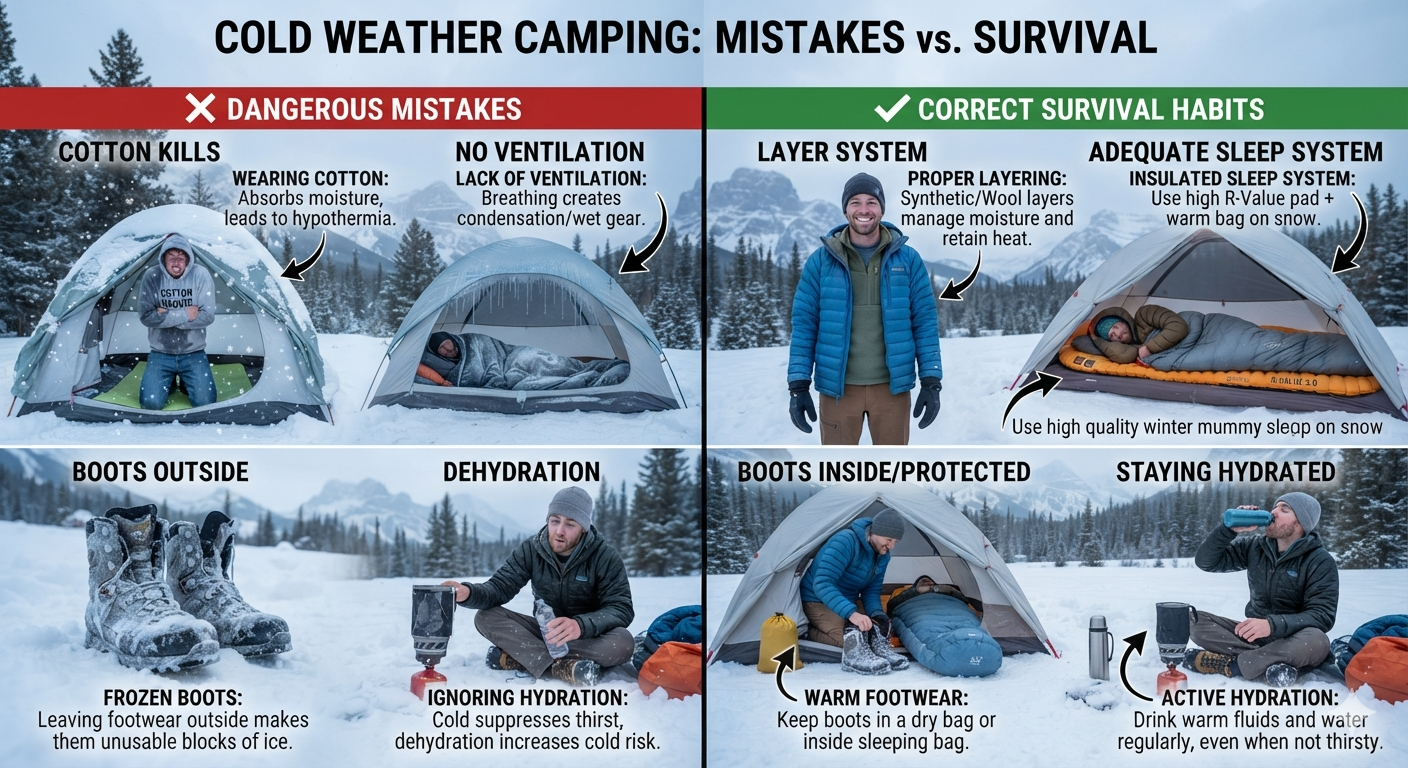
1. Wearing Cotton Clothing
You’ve probably heard the phrase:
“Cotton kills.”
While dramatic, it contains some truth.
Cotton absorbs moisture and dries slowly. Sweat trapped in cotton clothing can rapidly cool your body.
Better options include:
- Merino wool
- Synthetic base layers
- Fleece insulation layers
2. Using the Wrong Sleeping Bag
A summer sleeping bag won’t magically become warmer by adding extra blankets.
Many beginners underestimate nighttime temperatures.
Always choose a sleeping bag rated for temperatures lower than the forecasted lows.
3. Ignoring Ground Insulation
People often focus on sleeping bags while forgetting the cold ground beneath them.
The ground continuously pulls heat away from your body.
A quality sleeping pad with a suitable R-value is essential.
4. Not Eating Enough Calories
Cold weather burns energy.
Your body requires additional fuel to generate heat.
Common mistakes include:
- Skipping meals
- Eating too little
- Avoiding snacks
High-calorie foods often perform best during winter camping.
5. Going to Bed Cold
Many beginners crawl into their sleeping bag already chilled.
A sleeping bag traps existing body heat—it doesn’t create it.
Before bed:
- Take a short walk
- Drink a warm beverage
- Eat a snack
6. Overdressing During Activity
This mistake surprises many new campers.
Too many layers while hiking can cause excessive sweating.
Wet clothing eventually leads to heat loss.
Dress slightly cool when moving and add layers during rest periods.
7. Poor Tent Placement
Setting up camp in the wrong location can increase exposure to:
- Wind
- Snow accumulation
- Moisture
Look for natural windbreaks and elevated ground when possible.
8. Neglecting Hydration
Cold weather often suppresses thirst.
Many campers drink less than they should.
Dehydration increases fatigue and makes it harder for your body to stay warm.
9. Failing to Check Weather Changes
Winter weather can shift rapidly.
A forecast that looks manageable in the morning may become dangerous by evening.
Always monitor:
- Temperature drops
- Wind speeds
- Snow forecasts
- Storm warnings
10. Bringing No Emergency Backup Plan
Even experienced campers prepare for unexpected situations.
Always carry:
- Extra food
- Additional insulation
- Emergency shelter
- Communication device
Related Posts:
Camping Safety Tips
Indoor Plants That Survive Without Sunlight in Apartments
Step-by-Step Guide
Step 1 – Prepare the Right Clothing System
Think in layers.
Base Layer
- Moisture-wicking material
- Merino wool or synthetic fabric
Mid Layer
- Fleece or insulated jacket
Outer Layer
- Waterproof and windproof shell
Avoid relying on one bulky coat.
Step 2 – Build a Warm Sleeping Setup
Your sleeping system should include:
- Cold-weather sleeping bag
- Insulated sleeping pad
- Sleeping bag liner (optional)
- Dry sleep clothing
A good sleeping pad often makes a bigger difference than beginners expect.
Step 3 – Manage Heat, Food, and Hydration
During the day:
- Eat regularly
- Stay hydrated
- Adjust layers frequently
- Avoid excessive sweating
At night:
- Eat a calorie-dense snack
- Change into dry clothing
- Store essentials inside the tent
These small habits dramatically improve comfort and safety.
Benefits
Cold-weather camping offers unique rewards.
Fewer Crowds
Popular campgrounds become quieter during colder months.
Beautiful Scenery
Snow-covered forests and frozen landscapes create unforgettable views.
Improved Outdoor Skills
Winter camping teaches:
- Self-reliance
- Planning
- Adaptability
Better Wildlife Opportunities
Many areas offer unique winter wildlife experiences.
Personal Confidence
Successfully handling challenging conditions builds confidence for future adventures.
Drawbacks or Things to Consider
Cold-weather camping isn’t for everyone.
Higher Gear Costs
Specialized equipment often costs more.
Increased Risk
Mistakes can have greater consequences.
More Preparation
Trip planning becomes significantly more important.
Reduced Comfort
Even well-prepared campers experience some discomfort in extreme conditions.
Limited Daylight
Winter days provide fewer hours for hiking and camp setup.
Expert Tips and Personal Insights
After years of camping in temperatures ranging from mild autumn nights to deep winter conditions, a few lessons consistently stand out.
Keep Tomorrow’s Clothes Warm
Place the next day’s clothing inside your sleeping bag.
You’ll appreciate this when changing in the morning.
Use a Hot Water Bottle
Fill a durable bottle with warm water and place it near your feet before bed.
This simple trick can dramatically improve comfort.
Protect Batteries
Cold temperatures drain batteries faster.
Keep electronics close to your body or inside your sleeping bag.
Ventilate Your Tent
Many beginners seal every opening.
This often causes condensation buildup.
A little ventilation reduces moisture and improves comfort.
Always Pack More Socks
Dry socks can completely change your mood after a long, cold day.
I’ve never met an experienced winter camper who complained about carrying too many socks.
Recommended Products and Tools
Comparison Table
| Product Type | Best For | Advantages | Limitations |
| Winter Sleeping Bag | Overnight warmth | Excellent insulation | Bulkier and heavier |
| Insulated Sleeping Pad | Ground protection | Prevents heat loss | Adds packing volume |
| Merino Wool Base Layers | Moisture management | Warm even when damp | Higher cost |
| Camping Stove | Hot meals and drinks | Improves comfort | Requires fuel |
| Headlamp | Winter darkness | Hands-free lighting | Battery dependent |
Winter Sleeping Bag
Who It Is For
Campers expecting temperatures near or below freezing.
Pros
- High warmth-to-weight ratio
- Better overnight comfort
- Improved safety
Cons
- More expensive
- Larger packed size
Why It Helps
Your sleeping bag serves as your primary defense against overnight cold.
Insulated Sleeping Pad
Who It Is For
Anyone camping on cold ground.
Pros
- Significant heat retention
- Lightweight options available
- Improved comfort
Cons
- Additional gear to carry
Why It Helps
Ground insulation is often the missing piece in a cold-weather sleep system.
Merino Wool Base Layers
Who It Is For
Campers spending long hours outdoors.
Pros
- Moisture management
- Odor resistance
- Comfortable fit
Cons
- Higher price point
Why It Helps
Staying dry is one of the most effective ways to stay warm.
Portable Camping Stove
Who It Is For
Campers preparing hot meals and drinks.
Pros
- Reliable heat source
- Convenient cooking
- Boosts morale
Cons
- Requires fuel management
Why It Helps
Warm food and beverages can improve comfort and energy levels during cold-weather trips.
Headlamp
Who It Is For
All campers.
Pros
- Hands-free use
- Essential during long winter nights
- Lightweight
Cons
- Battery dependence
Why It Helps
Winter darkness arrives early, making reliable lighting critical.
Buyer’s Guide
Choosing cold-weather camping gear requires focusing on function rather than marketing claims.
Features to Look For
Sleeping Bags
Look for:
- Appropriate temperature rating
- Quality insulation
- Draft collar
- Hood design
Sleeping Pads
Prioritize:
- High R-value
- Durability
- Packability
Clothing
Choose:
- Moisture-wicking materials
- Layering compatibility
- Weather resistance
Tents
Consider:
- Ventilation
- Wind resistance
- Interior space
How to Choose the Right Product
Ask yourself:
- What temperatures will I face?
- How long is my trip?
- Will conditions be wet or dry?
- How much weight can I carry?
- What is my budget?
When a Product May Not Be Suitable
Heavy Winter Sleeping Bags
May be excessive for mild autumn camping.
Four-Season Tents
Often unnecessary for casual cold-weather trips.
Premium Gear
Not always required for beginners testing the activity.
Choose equipment that matches your actual conditions rather than worst-case scenarios.
Frequently Asked Questions
1. What is the biggest cold-weather camping mistake beginners make?
Using inadequate sleep systems is one of the most common mistakes. Many people underestimate how much warmth they lose through the ground and during the night.
2. Is winter camping safe for beginners?
Yes, provided beginners prepare properly, use suitable gear, monitor weather forecasts, and avoid taking unnecessary risks.
3. How cold is too cold for camping?
This depends on your experience, equipment, and physical condition. Beginners should start with moderately cold conditions before attempting extreme winter temperatures.
4. Should I sleep in all my clothes while camping?
Not necessarily. Wearing dry layers designed for sleeping is usually more effective than sleeping in damp clothing worn during the day.
5. How do I stay warm in a tent at night?
Use an insulated sleeping pad, an appropriate sleeping bag, dry clothing, proper nutrition, and adequate hydration.
6. Why do I feel colder after sweating?
Sweat increases heat loss through evaporation. Moisture against the skin accelerates cooling, especially in windy conditions.
7. What food is best for cold-weather camping?
Calorie-dense foods such as nuts, oatmeal, peanut butter, trail mix, cheese, and hearty meals help support energy and warmth.
Final Thoughts
The most important lesson about camping in cold weather survival mistakes beginners make is that success rarely comes from being tougher—it comes from being better prepared.
The campers who enjoy winter adventures aren’t necessarily the strongest or most experienced. They’re the ones who understand layering, manage moisture, stay hydrated, eat enough calories, and plan for changing conditions.
If you’re new to cold-weather camping, start small. Choose manageable temperatures, test your gear, learn from each trip, and build your confidence gradually. With the right preparation, cold-weather camping can become one of the most rewarding outdoor experiences you’ll ever have.