
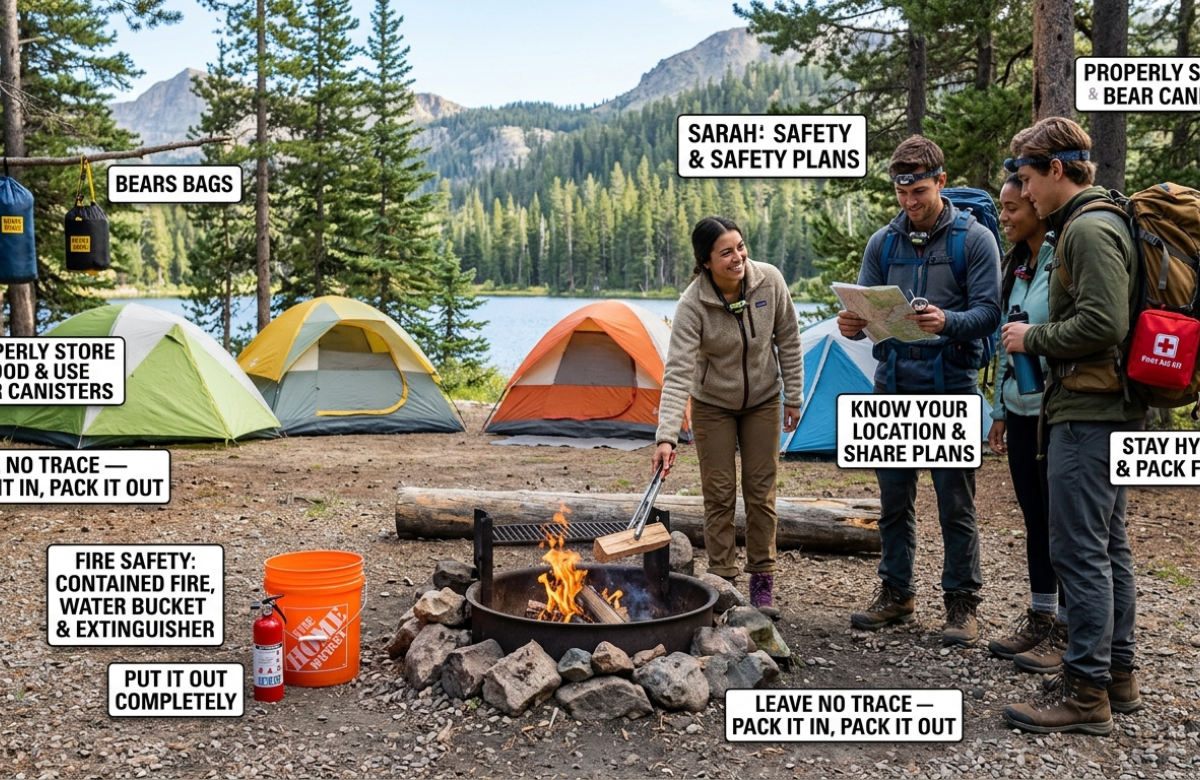
Camping offers a chance to unplug from busy schedules, breathe fresh air, and reconnect with nature. Whether you’re spending a weekend at a family campground or exploring a remote wilderness area, few experiences compare to waking up to birdsong and enjoying coffee beside a campfire.
But even the most beautiful camping trip can quickly become stressful if you aren’t prepared. I still remember a weekend when unexpected rain turned a peaceful campsite into a muddy mess. A neighboring family hadn’t packed waterproof gear, and by morning, soaked sleeping bags and cold clothes had taken the fun out of their trip. That experience reinforced an important lesson: preparation isn’t about expecting the worst—it’s about making sure small problems don’t become big ones.
That’s why understanding camping safety tips is one of the most valuable parts of planning any outdoor adventure. A little preparation goes a long way toward helping you stay comfortable, confident, and ready to enjoy everything nature has to offer.
What You Need to Know About Camping Safety Tips
Camping safety isn’t about worrying every minute you’re outdoors. Instead, it’s about reducing avoidable risks so you can focus on enjoying your trip.
The biggest hazards campers face are often surprisingly ordinary:
- Sudden weather changes
- Campfire accidents
- Food contamination
- Wildlife encounters
- Getting lost
- Dehydration
- Poor campsite selection
- Equipment failure
Fortunately, nearly all of these situations can be prevented with proper planning.
Good camping habits begin long before your vehicle leaves the driveway. Checking weather forecasts, inspecting your equipment, and sharing your travel plans with someone at home are simple actions that can make a significant difference.
Another overlooked part of camping safety is understanding your own limits. A short family camping trip at an established campground requires different preparation than hiking several miles into the backcountry. Choose adventures that match your experience level.
Common Mistakes People Make
Even experienced campers occasionally make mistakes. Here are the ones that happen most often.
1. Ignoring the Weather Forecast
Weather changes quickly in many outdoor areas.
Many campers assume sunny skies will last all weekend, only to face heavy rain or strong winds a few hours later.
Always prepare for changing conditions.
2. Packing Too Little Water
Water is heavier than most people expect, so many beginners underestimate how much they’ll need.
A good rule is to carry more drinking water than you think you’ll use, especially during hot weather.
3. Leaving Food Unprotected
Improper food storage attracts wildlife.
Even small animals like raccoons can create major problems around camp.
Store food securely and keep cooking areas clean.
4. Setting Up Camp Too Close to Water
Camping beside rivers or lakes may look beautiful, but water levels can rise overnight after upstream rainfall.
Choose higher ground whenever possible.
5. Forgetting Basic First Aid Supplies
Small cuts, blisters, insect bites, and splinters happen frequently.
A compact first aid kit takes little space but can solve many common camping problems.
6. Building Unsafe Campfires
Campfires should always remain inside designated fire rings whenever available.
Never leave a fire unattended, and completely extinguish it before sleeping or leaving camp.
Related Posts:
Best Night Routine for Glowing Skin in 7 Days
Camping in Cold Weather Survival Mistakes
Step-by-Step Guide
Step 1: Plan Before You Leave
Preparation is the foundation of camping safety.
Create a checklist several days before departure.
Your checklist should include:
- Tent and stakes
- Sleeping bags
- Sleeping pads
- Flashlights
- Extra batteries
- Water containers
- Food
- Stove or cooking equipment
- First aid kit
- Weather-appropriate clothing
- Maps
- Compass or GPS
- Emergency whistle
- Multi-tool
- Power bank
- Rain gear
Also remember to:
- Check weather conditions.
- Research campground rules.
- Download offline maps.
- Inform a friend or family member where you’ll be camping.
- Estimate your return time.
Step 2: Set Up a Safe Campsite
Choosing the right campsite matters more than many beginners realize.
Look for:
- Flat ground
- Natural drainage
- Shade during hot weather
- Safe distance from dead trees
- Protection from strong winds
- Access to clean water (without camping directly beside it)
Avoid:
- Low areas where rain collects
- Loose rocks
- Steep slopes
- Flood-prone ground
- Animal trails
Keep your cooking area separate from where you sleep.
This reduces odors that may attract wildlife.
Step 3: Practice Safe Camping Habits
Safety continues throughout your trip.
Develop these habits:
- Stay hydrated.
- Wash your hands before preparing food.
- Wear appropriate footwear.
- Keep flashlights nearby after dark.
- Never wander away from camp without telling someone.
- Keep children within sight.
- Store sharp tools safely.
- Monitor changing weather.
- Dispose of trash properly.
- Respect wildlife by observing from a distance.
If you’re hiking, carry essential supplies even on short walks.
Many emergencies begin with “just a quick hike.”
Benefits of Following Camping Safety Tips
Practicing safe camping habits offers more than just peace of mind.
| Benefit | Why It Matters |
| Fewer accidents | Reduces preventable injuries |
| Better trip experience | Less stress and more enjoyment |
| Protection from weather | Helps you stay warm and dry |
| Safer food handling | Lowers the risk of foodborne illness |
| Better emergency readiness | Makes unexpected situations easier to manage |
| Greater confidence | Encourages more outdoor adventures |
When safety becomes routine, camping feels much more relaxing because you’re prepared for common challenges.
Drawbacks or Things to Consider
While preparation is essential, it’s possible to overpack.
Bringing unnecessary gear can make transportation and campsite setup more difficult.
Other considerations include:
- Quality gear costs more upfront.
- Learning outdoor skills takes practice.
- Some remote campsites require additional planning.
- Weather can still change unexpectedly despite preparation.
The goal isn’t perfection—it’s thoughtful preparation.
Expert Tips and Personal Insights
Over the years, I’ve noticed that experienced campers aren’t necessarily the ones with the most expensive equipment. They’re usually the ones with the best habits.
One habit I’ve adopted is packing important items in clear waterproof bags. Even if rain surprises you, it’s much easier to find dry clothes, first aid supplies, or electronics.
Another useful trick is to arrive at camp well before sunset. Setting up a tent in daylight is far easier than trying to assemble it with a flashlight after dark.
I also recommend testing every piece of gear at home before your trip. Inflate sleeping pads, check lantern batteries, and practice setting up your tent. Finding a missing tent pole in your backyard is much better than discovering it after driving hours to your campsite.
Finally, don’t underestimate the value of simple routines. Cleaning up immediately after meals, keeping gear organized, and checking the weather each morning can prevent many common camping problems.
Recommended Products and Tools
| Product | Best For | Pros | Cons | Why It Helps |
| Four-person tent | Families | Spacious, weather protection | Heavier | Provides reliable shelter |
| LED headlamp | All campers | Hands-free lighting | Requires batteries | Safer movement after dark |
| First aid kit | Everyone | Compact and organized | Needs occasional restocking | Handles common injuries |
| Water filter | Backpackers | Reduces carried water weight | Requires maintenance | Helps access safe drinking water |
| Portable power bank | Weekend campers | Charges electronics | Limited capacity | Useful for emergencies |
| Bear-resistant food container (where needed) | Wildlife areas | Protects food | Bulky | Helps reduce wildlife encounters |
Camping Gear Buyer’s Guide
Choosing camping gear can feel overwhelming because there are countless options available. Focus on buying equipment that matches the type of camping you actually plan to do.
Features to Look For
- Durable materials
- Weather resistance
- Lightweight construction for hiking
- Easy setup
- Reliable warranties
- Good ventilation
- Compact storage size
How to Choose the Right Product
Ask yourself:
- Will I camp occasionally or frequently?
- Am I driving to camp or hiking in?
- How many people need shelter?
- What weather conditions will I face?
Your answers will help narrow your choices and prevent overspending on features you don’t need.
When a Product May NOT Be Suitable
A lightweight backpacking tent may not be ideal for a family of four.
Similarly, a large family tent isn’t practical if you’re hiking several miles to your campsite.
Choose gear based on your camping style rather than popularity.
Frequently Asked Questions
1. What are the most important camping safety tips?
Plan ahead, check the weather, pack emergency supplies, store food properly, stay hydrated, and never leave campfires unattended.
2. How much water should I bring camping?
Bring more than you expect to need. The exact amount depends on temperature, activity level, and water availability, but always have a backup plan for safe drinking water.
3. How can I keep wildlife away from my campsite?
Store food securely, dispose of trash properly, avoid leaving scented items outside, and cook away from your sleeping area.
4. What should every camping first aid kit include?
Bandages, antiseptic wipes, gauze, adhesive tape, tweezers, blister treatment, pain relievers, scissors, disposable gloves, and any personal medications.
5. Is camping safe for beginners?
Yes. Starting at established campgrounds, preparing properly, and following basic camping safety tips makes camping enjoyable and manageable for most beginners.
Final Thoughts
The best camping memories usually come from simple moments—watching the sunrise, sharing stories around the fire, or listening to the sounds of nature after dark. A little preparation helps keep those moments enjoyable instead of stressful.
Following practical camping safety tips doesn’t mean expecting something to go wrong. It means giving yourself the confidence to handle the unexpected if it does. Pack thoughtfully, respect nature, stay aware of your surroundings, and continue learning with each trip. Over time, safe habits become second nature, allowing you to focus on what camping is really about: enjoying the outdoors and creating lasting memories.