Kitchen Pantry Organization by Reach Zone: Shelf Depths, Airtight Containers, and Inventory Habits
Replace cluttered deep shelves with ergonomic reach zones, breathable root-vegetable baskets, and practical decanting rules that reduce household food waste.
By DailyPrimeX Home & Design Desk · · 3 min read
Why Deep Pantry Shelves Lead to Forgotten Ingredients
Standard base kitchen cabinets are 24 inches deep to accommodate countertops and sinks, yet when that same 24-inch depth is used for fixed pantry shelving, the back 12 inches rapidly become a dark dead zone. Unopened cans, duplicate spice jars, and expired baking ingredients accumulate out of sight.
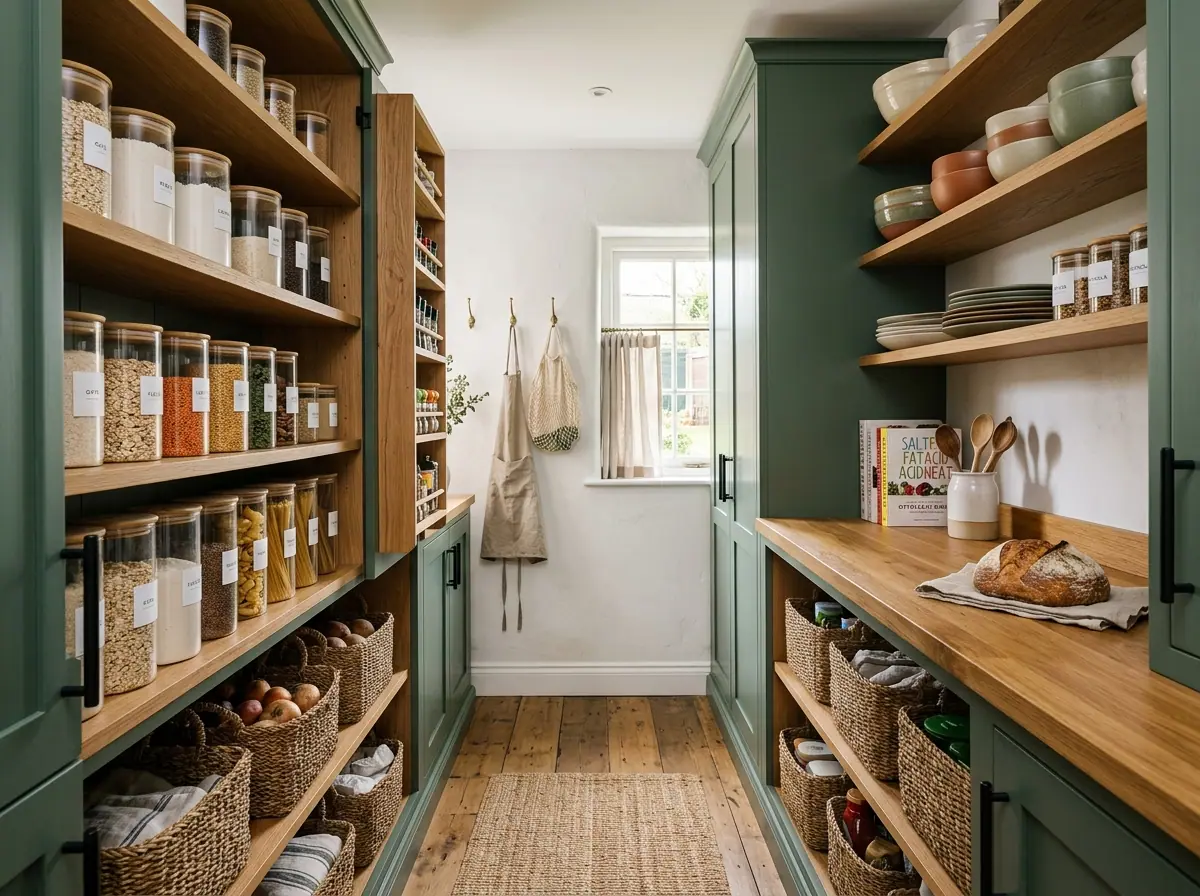
Whether you are configuring an adjustable reach-in closet or a full walk-in pantry, organizing vertically by human reach zone—and horizontally by container transparency—eliminates the need to unpack an entire shelf just to check what you need before grocery shopping.
Seasonal platters, canning jars, rare cookware.
Handled baskets for snacks, paper goods & baking.
10–12 in shallow shelves: everyday jars, oils, spices.
Heavy Dutch ovens, appliances, pull-out drawers.
Bulk flour bins on casters, dark root-crop crates.
The Five-Tier Vertical Pantry Zoning System
Map your pantry from floor to ceiling into five distinct functional bands based on item weight and usage frequency:
Step 1: Zone 1: Floor & Lower Plinth (0 – 18 Inches)
Tools: Heavy-duty felt glides, Wire or seagrass crates
Reserve the floor level for heavy bulk refills: sparkling water cases, 25-pound flour or pet food bins on casters, and root vegetable baskets that benefit from cooler floor-level temperatures.
Step 2: Zone 2: Countertop & Waist Height (18 – 36 Inches)
Tools: Butcher block work surface, Pull-out wooden drawers
Store heavy enameled cast-iron Dutch ovens, small appliances, and daily breakfast items here so children and adults can lift them without overhead strain.
Step 3: Zone 3: Eye-Level Prime Zone (36 – 60 Inches)
Tools: Borosilicate glass canisters, Silicone-gasket lids
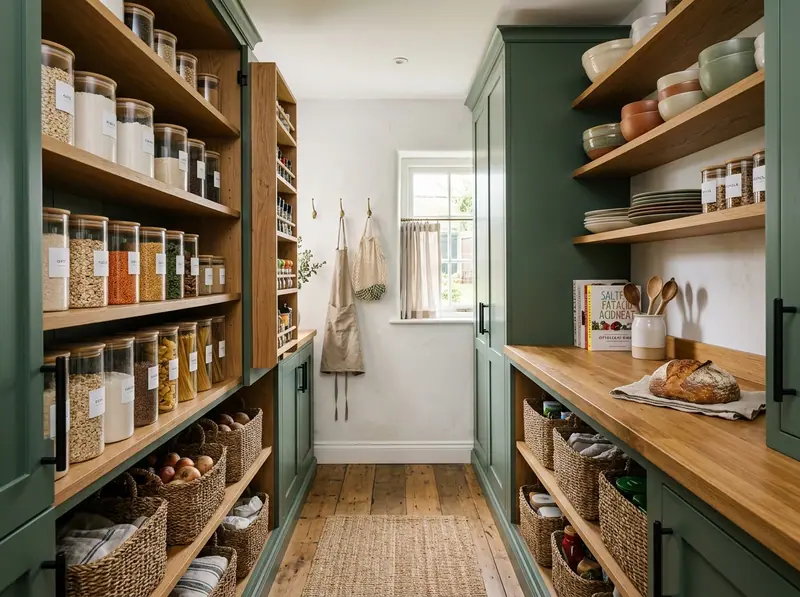
Dedicate eye-level shelves to everyday cooking staples: oils, vinegars, pasta, grains, legumes, and everyday spices. Keep these shelves shallow (10 to 12 inches) so every label is readable at a glance.
Step 4: Zone 4: Upper Reach Shelf (60 – 72 Inches)
Tools: Handled woven baskets, Clip-on bin labels
Place lightweight items such as paper goods, baking molds, and backstock snacks inside uniform baskets with sturdy front handles that pull down safely like drawers.
Step 5: Zone 5: High Archive Shelf (72+ Inches)
Tools: Folding step stool stored vertically
Use the topmost shelf strictly for seasonal platters, canning jars, or holiday roasting pans needed only two or three times a year.
Practical Rules for Decanting Dry Goods
Social media pantries often show every cracker, cereal, and spice poured into dozens of matching jars, but over-decanting creates extra dishwashing work and divorces foods from their expiration dates and cooking ratios. When you wipe down shelves and butcher block, our pH-neutral cleaning guide explains which cleaners are safe for each surface.
| Ingredient Category | Recommended Storage Container | Ideal Environment | Practical Reason |
|---|---|---|---|
| All-Purpose Flour, Rolled Oats, Rice | Wide-mouth glass jar with silicone seal | Cool, dry shelf away from oven heat | Prevents pantry moths and humidity clumping |
| Whole-Bean Coffee & Loose Tea | Opaque ceramic or tinted UV-blocking tin | Dark eye-level shelf (never above stove) | Light and oxygen degrade volatile oils rapidly |
| Olive Oil & Cooking Oils | Dark green/amber glass or tin spout bottle | Cool cabinet away from window sunlight | Direct sunlight causes photo-oxidation and rancidity |
| Onions, Shallots & Garlic | Open-weave seagrass or wire basket | Low, dry, dark shelf with airflow | Trapped moisture in plastic bags causes mold |
| Specialty Grains &Boxed Mixes | Original package inside grouped category bin | Middle reach shelf | Preserves exact water-to-grain cooking times |