Designing a Pet-Friendly Mudroom and Entryway: Durable Flooring, Storage Benches, and Wash Zones
How to configure a hardworking household entryway that handles muddy paws, leashes, and wet coats using slip-resistant tile, washable textiles, and ventilated cabinetry.
By DailyPrimeX Household & Pet Care Desk · · 2 min read
Containing Moisture and Grit Within the First Six Feet
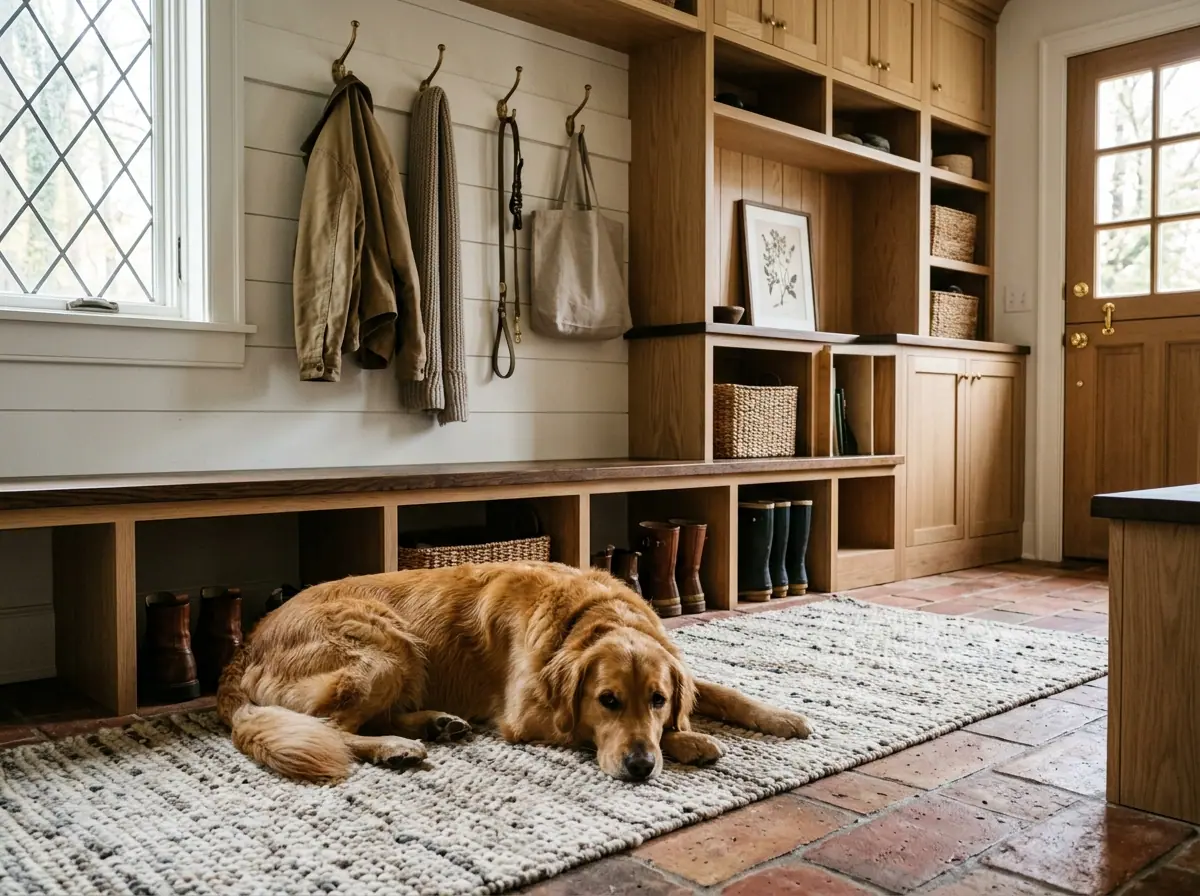
The most effective way to keep hardwood floors and living room upholstery clean in a pet household is to capture water, sand, and seasonal grit within the first six feet of the exterior door. A well-organized mudroom—or even a dedicated four-foot hallway alcove—functions as an airlock between the yard and living areas. Once grit is caught at the door, our pH-neutral cleaning guide for stone, wood, and brass explains how to wash the floors that remain without damaging them.
Rather than storing leashes, waste bags, and paw towels in separate closets, group them into a single reach zone adjacent to the door latch. When a towel and a dedicated sitting mat are immediately available upon entry, wiping paws becomes an effortless thirty-second habit.
Dislodges coarse pebbles, mud clumps, and road salt before crossing the sill.
Microfiber towel hung at 32 in height for immediate paw drying before stepping onto rugs.
Air-ventilated lower bays allow wet harnesses and boots to dry completely between walks.
Related reading
- pH-Neutral Household Surface Cleaning Guide — Learn how to clean sealed terracotta, slate, and hardwood thresholds safely
Comparing Entryway Flooring Materials for Traction and Scratch Resistance
High-gloss tiles and soft pine floorboards struggle in active pet entryways: glossy surfaces reduce paw traction, which can strain a dog’s hips and shoulders when turning quickly, while softwoods dent under claws and trapped gravel. Use the comparison below to evaluate suitable entryway surfaces.
| Flooring Material | Claw & Grit Resistance | Paw Traction (Wet) | Maintenance Requirement |
|---|---|---|---|
| Matte Porcelain Tile (DCOF ≥ 0.42) | Excellent (Mohs 7+) | High | Sweep & damp mop; seal grout lines annually |
| Sealed Natural Terracotta / Quarry Tile | Very Good | High | Requires penetrating sealer every 2–3 years |
| Natural Cleft Slate Tile | Excellent | Very High | Clean textured crevices with soft bristle brush |
| Site-Finished White Oak (Matte Urethane) | Moderate | Moderate | Wipe standing water promptly; use runner rugs |
| Luxury Vinyl Plank (20+ mil wear layer) | Good | Moderate | Avoid steam mops; check seam locks for moisture |
Ergonomic Bench Seating and Ventilated Cubby Dimensions
A built-in mudroom bench serves two purposes: it gives household members a stable seat at 17 to 18 inches high for removing boots, and it creates structured lower compartments for footwear and pet supplies. Leave at least one wider lower bay—24 to 30 inches wide by 18 inches deep—if you want to tuck a washable pet bed or drying mat underneath without obstructing the walkway.
Essential Mudroom Pet Station Checklist:
- Two absorbent microfiber or tightly woven cotton loop towels hung on lower drying hooks (32 inches from floor) so air circulates around damp fabric.
- Sealed stainless steel or ceramic canister on an upper shelf (out of reach of counter-surfing dogs) for training treats and spare collar tags.
- Low-profile, cut-pile or tight flatweave washable runner rug (avoid high-loop berber weaves that can snag toenails).
- Dedicated boot tray with a 1-inch raised lip to hold wet winter boots and rinsed portable water bowls.
Related reading
- Pet-Safe Indoor Plants & Botanical Placement Guide — Select non-toxic foliage for bright entryways and sunrooms